


I've been a general contractor for 14 years. In that time, I've killed more smartwatches than I can count. Apple Watch: scratched to hell by week 2, dead by week 8. Samsung: concrete dust got into the rotating bezel, water finished it off. Amazon "military grade": don't get me started. So I decided to document this properly — 10 weeks, 7 watches, one active job site. No lab testing. No controlled environments. Real work, real conditions, real consequences.
What I Found After 10 Weeks
By week 4, three watches were dead. The Amazon brands didn't even make it through the first week. The Apple Watch Ultra 2 — which Apple advertises for outdoor use — died after one 12-foot drop off scaffolding. The Samsung Galaxy Watch 6 Classic had concrete dust embedded in its rotating bezel by week 3, and water ingress finished it off by week 7. That left four survivors going into the second half of testing. By week 10, only two watches were still fully functional: the Garmin Fenix 7X at $1,300 and the Njord APEX.
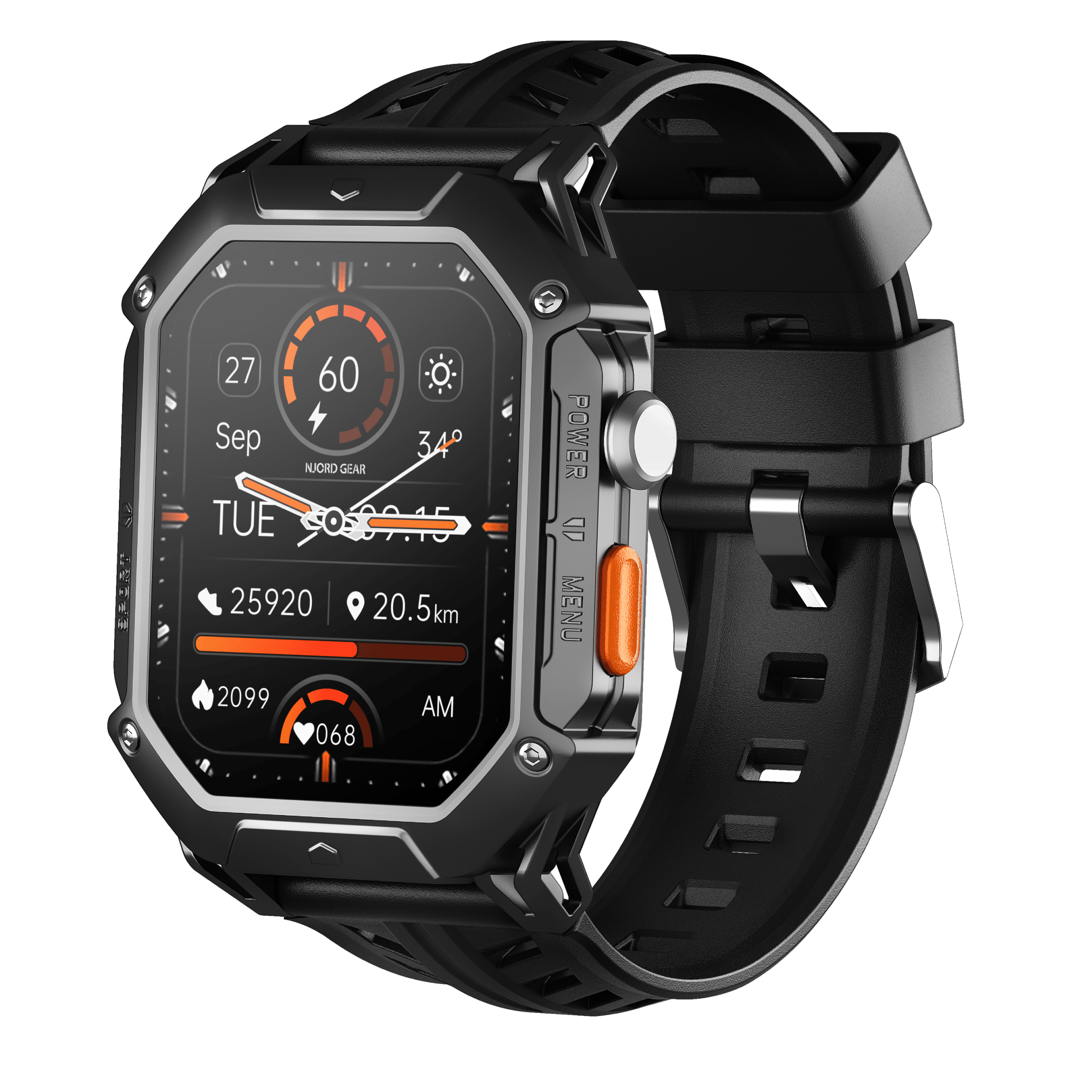
The APEX costs $149. Let that sink in. Same result. One-sixth the price. But here's the thing — the APEX had features that actually mattered on a job site: voice-to-text messaging, glove-compatible touch, and a screen you can read in direct sunlight. The Garmin is built like a tank, but it was designed for trail runners and hikers — not guys running a crew.
Field-tested 10 weeks. Still running. Use code TESTED10 at checkout. Get It Here →
The Feature That Surprised Me Most
I didn't expect voice-to-text to be a game-changer. I figured it was a gimmick. I was wrong. When you've got gloves on, a saw running, and someone on your crew texts you about a delivery — you can't pull your phone out. You can't tap the watch screen. With the APEX's voice-to-text, I'd raise my wrist, say my reply, and it sent. Clean. Every time. Even over machinery noise. My crew started asking where I got it within the first two weeks.
The Price Reality
Here's what I spent across the test: Apple Watch Ultra 2 at $799 — dead week 8, $499 repair quote, denied under warranty. Samsung Galaxy Watch 6 Classic at $429 — dead week 7, warranty voided. Garmin Fenix 7X at $1,300 — survived, but no voice-to-text, no glove-compatible features, no practical job site tools. The Njord APEX at $149 survived everything, delivered the features that mattered on a real job site, and is currently showing zero signs of wear after 10 weeks. The math here isn't complicated.
Is It Worth It?
If you work with your hands for a living — construction, trades, oil and gas, mining, first response — the Njord APEX is the only smartwatch I tested that I'd actually recommend to a guy on my crew. Full metal alloy case. IP69K waterproof rating. 15–17 day battery. Voice-to-text. Bluetooth calling. Costs less than a power tool. The 30-day money-back guarantee means you're not risking anything. I tested it for 10 weeks and it's earned a permanent spot on my wrist.
The numbered results from my 10-week test:
- Survived 10 Weeks Of Real Construction: Not a scratch on the metal case. The sapphire crystal screen is clear as day. Concrete dust, rain, direct sun, grease, and a 6-foot drop. Still running.
- Voice-To-Text Changed Everything: Replying to messages over machinery noise with gloves on is something I now can't work without. It's not a luxury — it's a safety feature.
- Battery That Lasts The Work Week (And Then Some): 15–17 days on a single charge. I charged it twice the entire month of testing. On a job site that's not a nice-to-have. That's a requirement.
- Glove-Friendly, Sunlight-Readable: Touch sensitivity works through work gloves. Screen is visible in full afternoon sun. These are the two things every other watch on this list failed at.